Digimon Card Game Encyclopedia
- 4.2
- Rating
- 100.00K
- Installs
- Free
- Price

 Analysis by App-foxy
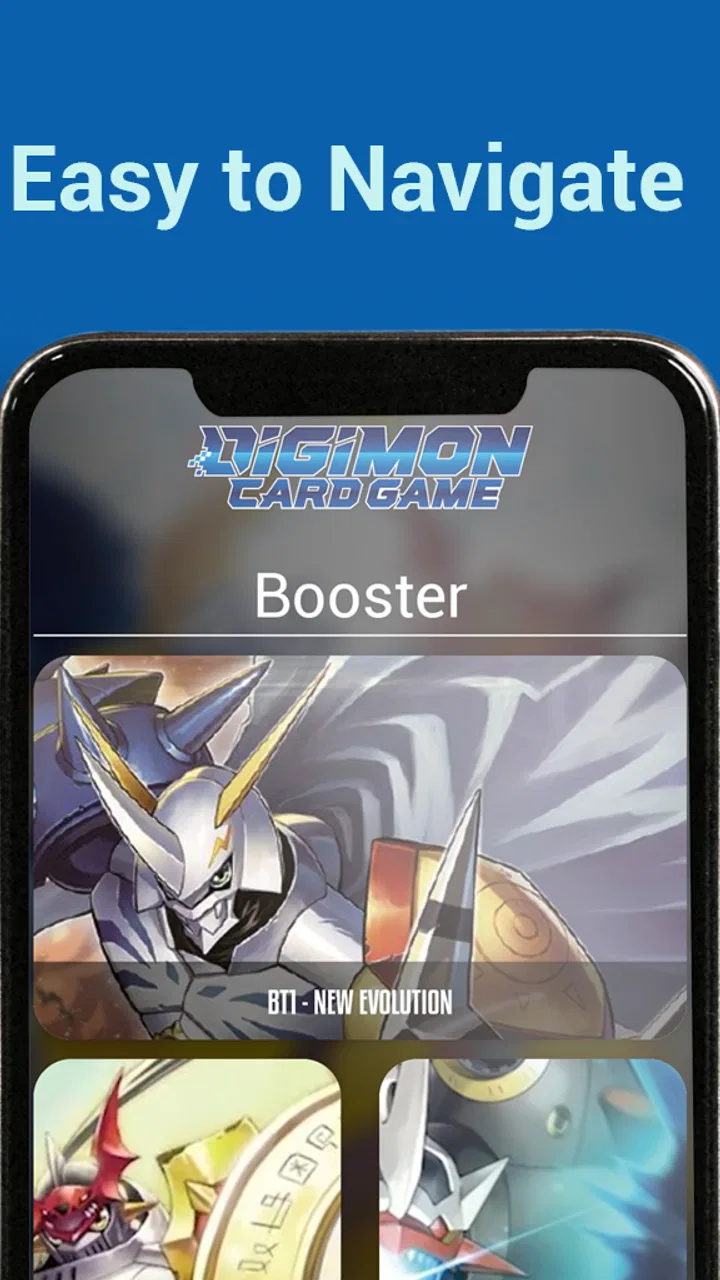
I approached Digimon Card Game Encyclopedia as a reference tool rather than as a game in its own right. That distinction matters. Its purpose is to help people explore Digimon Card Game information in one place, so the value comes from how useful and comfortable the lookup experience feels during deck planning, collection checking, or a quick rules-related search. After spending time with it, I see a focused companion for fans who want an encyclopedia-style resource on their phone, not a replacement for playing, trading, or managing a complete collection.
The app is developed by Hophoppoppop and belongs to the Libraries & Demo section. It is free to install, rated for Everyone, and has reached over 100 thousand installs. Its average score is 4.3 from around 800 ratings, which suggests that the basic idea works well for a sizeable group of users, while still leaving room for individual preferences about organization and depth.
What the encyclopedia is really useful for
The strongest way to use this app is as a fast reference point when you already know roughly what you are looking for. A player preparing a deck can open it while comparing card concepts, checking details, or reminding themselves what a particular Digimon does. Someone returning to the card game after a break can also use it to refresh their memory without opening a browser and sorting through unrelated results.
You May Also Like

 Blood Strike: 2.5 Anniversary
Blood Strike’s Loadouts Turn Every Drop Into a Tactical Gamble
A close look at Blood Strike’s custom loadouts: how fast access to signature weapons reshapes its battle royale rhythm, rewards preparation, and narrows the gap between fights.

 Pandora - Music & Podcasts
Pandora’s Music Is Easy to Start, but Harder to Recover
Pandora’s strength is its low-effort path from a seed to a station. Its weak spot is how much confidence it asks you to place in connection, setup, and quiet recovery.

 8 Ball Pool
 Is Built on Rivalries, Rematches, and Routine
A close look at the rivalries, rematches, shared routines, and unanswered safety questions that turn a quick pool match into a persistent mobile community.

 Samsung Music
’s Quiet Strength Is Playing What You Already Own
Its reach comes less from spectacle than from dependable access to a personal library. That simplicity is both the app’s strongest retention engine and its ceiling.

 AccuWeather: Weather Radar
AccuWeather Review: A Quick, Clear Forecast for Everyday Decisions
For everyday plans, the best forecast is the one you can understand quickly. AccuWeather makes rain timing, radar, and local conditions easy to act on, with a few trade-offs.

 Hill Climb Racing
Why Hill Climb Racing Still Turns Crashes Into One More Run
A tiny car, a bumpy hill and one more upgrade: Hill Climb Racing keeps resurfacing because its simple chaos makes every near-miss feel personal.
More From Our News Desk



I found that this kind of focused tool makes more sense in short sessions than in long reading sessions. You open it with a question in mind, inspect the relevant entry, and return to whatever you were doing. That makes it especially practical beside a physical card collection or during a casual conversation with another player. If a friend mentions a card and I want to understand why it matters, an encyclopedia is more convenient than searching through general web pages.
It is also a reasonable starting point for newcomers. The store summary presents it as a new Digimon card game encyclopedia, and that description accurately sets expectations: this is about information and discovery. A new player can browse the subject, become familiar with the card-game vocabulary, and decide which areas deserve deeper study. The app does not need to be treated as a competitive tool to be useful; it can simply make the early learning curve less scattered.
A practical workflow for deck planning
My preferred workflow would be to use the app before building a list, not only after a deck is finished. First, I would identify the Digimon or strategy I want to explore. Then I would use the encyclopedia to inspect related entries and note which cards deserve a closer look. After that, I would move to a dedicated deck builder or my own collection records for quantities, legality checks, and final organization.
That separation is important. An encyclopedia can help with discovery, but it should not automatically be assumed to replace a specialized deck-management service. A deck builder is normally better for tracking counts, testing several versions, and keeping a list ready for play. The app’s advantage is the quick reference layer between an idea and a finished deck.
There is a useful habit here that generic app descriptions rarely mention: use it to narrow your research before opening broader sources. Instead of searching the web with a vague phrase such as “good Digimon cards,” start with a specific theme or card name inside the app, then investigate only the results that fit your plan. This reduces distraction and helps prevent a deck from becoming a pile of interesting cards with no clear purpose.
Where it fits beside other resources
Compared with a general search engine, a dedicated encyclopedia should feel more direct because the subject is already defined. You are not competing with unrelated pages, videos, advertisements, or social posts for attention. That makes the app a better choice for a quick lookup, particularly when you are holding cards in one hand and using your phone with the other.
Compared with an official rules source, however, an encyclopedia should be treated as a convenience layer rather than the final authority for complicated disputes. If a ruling, tournament policy, card legality question, or timing interaction affects an important match, I would still consult the most authoritative current source available. This is not a criticism unique to this app; it is a sensible boundary for any compact reference tool that is designed for everyday browsing.
Compared with a community database, the trade-off is usually between focused simplicity and depth of discussion. Community resources may offer user comments, strategy notes, deck lists, or frequent corrections. This app is more appealing when I want to look something up without entering a discussion thread. It is less suitable when I need a complete competitive analysis or a conversation about how a card performs in a changing tournament environment.
Trust, controls, and the moments that deserve attention
When I review a reference app, I do not judge trust only by its subject matter. I also pay attention to what the app asks me to do, whether it makes choices understandable, and how much control I retain while using it. For this encyclopedia, the clearest positive is that the core proposition is easy to understand: it is a free app for browsing Digimon Card Game information, with optional in-app purchases ranging from $0.49 to $69.99 per item.
That pricing detail makes it worth pausing before any purchase prompt. Free installation does not necessarily mean every part of the experience is permanently free, so I would read each purchase screen carefully and avoid tapping through automatically. The broad range between the smallest and largest listed items means that a user should be especially deliberate if payment options appear. On a shared device, I would also make sure the store’s purchase authentication is enabled.
The app is available for devices running Android 6.0 or later, and the current version is 0.8.14. In practical terms, that makes compatibility fairly broad for older Android phones, though I would still check the device’s available storage and system behavior before relying on it for an event. A reference app is most useful when it opens quickly and remains available when needed, so keeping the operating system and app installation in a stable condition is a sensible precaution.
I would not treat the Everyone age rating as a guarantee that every family will prefer the same browsing experience. It does tell me that the app is presented for a general audience, which fits a card-game encyclopedia. Parents or guardians who manage a child’s device should still review the device-level purchase controls, particularly because the app includes optional paid items. That is a practical step, not a reason to avoid the app.
What I would check before depending on it
My first check would be whether the entries I need are easy to locate and sufficiently clear for the task at hand. Search convenience matters more than visual decoration in an encyclopedia. If I am looking up a card during a deck discussion, I want to spend my time understanding the entry rather than repeatedly guessing how the app organizes its content.
My second check would be whether the information suits the seriousness of my use. Casual deck ideas and collection browsing have a lower risk of inconvenience than a tournament ruling. For relaxed use, a compact reference can be perfectly adequate. For a competitive event, I would prepare a backup source and avoid assuming that any mobile encyclopedia alone settles a disputed interaction.
My third check would be how the app behaves around optional choices. I would distinguish between simply browsing information and responding to a purchase or account-related screen. If an action is not necessary for a lookup, I would skip it until I understood its purpose. This is one of the simplest ways to preserve control in any free app with in-app purchases.
I also prefer to keep my use narrowly focused. I would not enter personal information into a reference app unless a specific function clearly required it and the reason was understandable. I would likewise avoid treating the app as a place to store sensitive notes about my collection. A separate, trusted tool is usually a better home for personal records, especially if those records include purchase history or contact details.
Data-sensitive situations in everyday use
The most data-sensitive moment for me is not searching for a card; it is anything involving payment, sign-in, sharing, or a request to grant access on the device. I would read the wording of those screens instead of tapping quickly, and I would use the operating system’s permission controls to review choices when necessary. If the app can be used for ordinary browsing without an account, I would prefer that simpler path.
I would also be careful when using the encyclopedia in a store, at a tournament, or on a borrowed phone. Those situations create practical privacy risks even without making assumptions about the app’s internal data practices. A public screen can expose a collection list or search history to people nearby, and a borrowed device may retain account or purchase information. Closing the app afterward and avoiding payment on someone else’s device are sensible habits.
Another overlooked issue is the difference between card information and personal collection information. Looking up a card is one thing; recording which cards I own, what I paid, or where I live is another. I would keep those details separate unless I had a clear reason to combine them. That approach gives the encyclopedia a limited, useful role and reduces the amount of personal context attached to a simple lookup.
Because the app has a current version number and a long-running release history beginning on November 14, 2020, I would still check for updates before an important play session. A newer installation may improve compatibility or correct content issues, but an update can also change navigation. My practical habit would be to open the app once at home before taking it to an event, rather than discovering a change while waiting for a match.
How much control the user keeps
The user’s strongest form of control here is choosing the app’s role. I can use it as a lightweight encyclopedia, combine it with an official rules source, or skip it entirely in favor of a larger community database. That flexibility is valuable because no single reference tool handles every part of the card-game hobby equally well.
I would also keep purchase decisions separate from research decisions. If I am browsing cards, I should not feel pressure to buy anything simply because a paid option appears. The free entry point makes it possible to evaluate the basic usefulness first. Only after I understand what the optional item provides would I consider whether it is worth paying for.
For families, I would configure purchase authentication and review the device’s account settings before handing the phone to a child. For collectors, I would avoid using the app as the only record of ownership. For competitive players, I would save the relevant authoritative rules material separately. These small choices make the app easier to use without asking it to become something it was not designed to be.
Who should use it, and who should skip it
I think this app is a good fit for Digimon Card Game players who want a dedicated mobile reference, newcomers who need a starting point, and casual collectors who enjoy exploring card information without opening a full community platform. It is also useful for anyone who regularly has short questions and prefers a focused app over a general web search.
I would be more cautious about recommending it as the only resource for tournament preparation, detailed deck testing, or official rules arbitration. Players who need advanced statistics, social discussion, collection valuation, or highly structured deck management may be happier with a specialized alternative. The encyclopedia can support those activities, but it should not be expected to perform every one of them.
There is also a personal preference involved. If you already have a trusted database that combines card lookup, deck construction, rulings, and collection tracking, adding another app may not improve your routine. The reason to choose this one is convenience and focus, not the promise of replacing an entire ecosystem of tools.
My cautious verdict
After weighing its purpose against its boundaries, I see Digimon Card Game Encyclopedia as a useful companion for quick, subject-specific research. Its free installation, general-audience rating, broad Android compatibility, and established user base make it approachable, while the optional purchases mean I would pay attention to every checkout screen rather than assuming the whole experience is cost-free.
My main recommendation is to treat it as a reference layer, not as your only source of truth. Use it to discover cards, refresh your memory, and guide early deck ideas. Keep official rules material nearby for disputes, use a dedicated deck builder for list management, and protect personal and payment information through your device settings.
For a friend who plays casually or is just getting into the Digimon Card Game, I would say it is worth trying because the commitment is low and the purpose is clear. I would not insist on it for a serious competitor who already has a complete workflow. The app earns its place when it saves time during everyday lookups; it becomes less compelling when you need deep analysis, social features, or formal tournament certainty.
In short, Hophoppoppop has made a focused tool for people who want Digimon card information close at hand. I like its practical role, but I would use it deliberately: browse first, understand any optional payment choice, keep sensitive records elsewhere, and confirm important rulings through the strongest available authority. With those habits, it can be a convenient addition to a player’s phone rather than an app that carries more responsibility than it should.
FAQs for Digimon Card Game Encyclopedia
01What is the Digimon Card Game Encyclopedia app?
The Digimon Card Game Encyclopedia is a comprehensive app designed for fans of the Digimon card game. It provides detailed information about various cards, rules, and strategies. Users can explore card databases, learn about different decks, and stay updated with the latest game news and updates.
02Is the Digimon Card Game Encyclopedia app free to use?
Yes, the app is free to download and use. However, it may offer in-app purchases or ads to enhance the user experience. These optional purchases might include premium features, such as advanced deck-building tools or exclusive content, to help support the app's development.
03How frequently is the card database updated?
The card database in the Digimon Card Game Encyclopedia is updated regularly to ensure users have access to the latest information. Updates often coincide with new card releases or major game announcements, ensuring that players can stay current with the evolving landscape of the Digimon card game.
04Can I use the app to manage my own card collection?
Yes, the app includes features for managing your personal card collection. Users can catalog their cards, track which ones they own, and even create custom decks. This functionality makes it easy for players to organize their collections and plan future purchases or trades.
05Is the Digimon Card Game Encyclopedia app available on both Android and iOS?
The app is available on both Android and iOS platforms, making it accessible to a wide range of users. It can be downloaded from the Google Play Store for Android devices and the Apple App Store for iOS devices. Ensure your device meets the necessary system requirements for optimal performance.
Pros
- Comprehensive card database available.
- User-friendly interface for easy navigation.
- Regular updates with new card releases.
- Detailed card statistics and descriptions.
- Offline access to card information.
Cons
- Limited features in the free version.
- Occasional crashes on older devices.
- In-app ads can be intrusive.
- No multiplayer or interactive features.
- Requires frequent updates for accuracy.

Digimon Card Game Encyclopedia
Gallery